
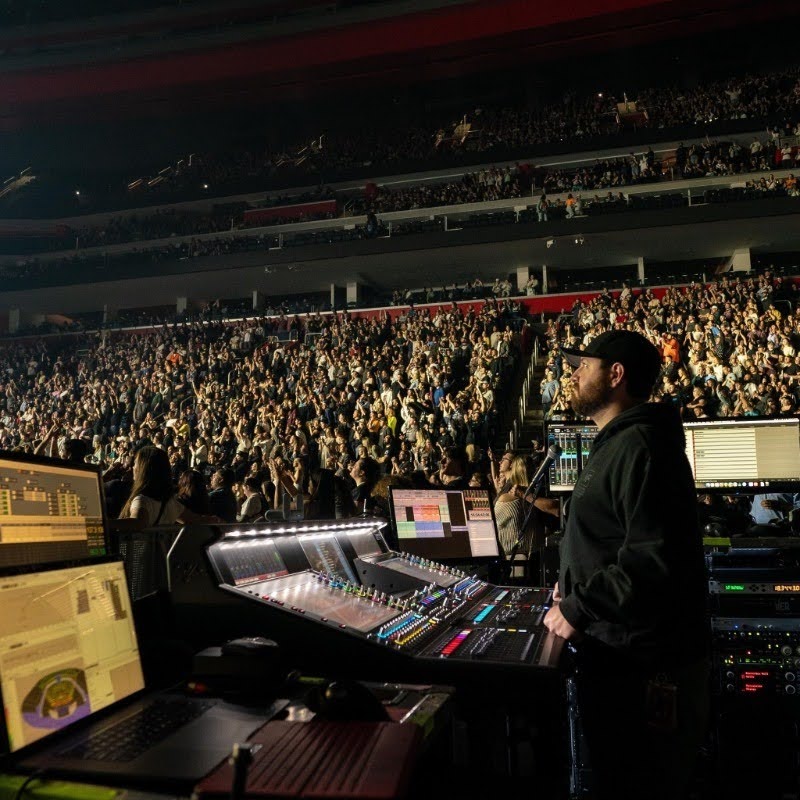
What does it actually take to make a live event sound great? We sat down with Travis Stoker, Audio Director at Technical Elements, to find out. From touring with symphony orchestras in Tokyo to solving wild technical problems in Glasgow, Travis brings a level of expertise and calm under pressure that defines what great live sound looks like.
How did you get your start in sound?
Travis got his start through local churches and events, gravitating toward the technical side of production at a young age. As a musician, he was always curious about how the PA worked, why rooms sounded different, and how small changes made a big impact. That curiosity turned into hands-on experience, and once he started touring, he knew live sound was a long-term calling.
What’s the most memorable event you’ve ever mixed?
“One of the most memorable events I’ve mixed was the Tokyo Philharmonic Orchestra performing with Disney Princess – The Concert at the International Forum in Tokyo, Japan.”
The combination of a full symphony orchestra, multiple vocalists, and a world-class acoustic space made it both technically demanding and deeply rewarding. As Travis puts it, moments where technical execution and musical sensitivity matter equally are the ones that really stand out.
What does a typical day of show look like at Technical Elements?
It starts early. Load-in means coordinating with the crew on PA placement, running signal, verifying networking, and making sure RF is clean. Once everything is powered up, Travis tunes the system and walks the room to confirm coverage. Soundcheck is about dialing in inputs and locking in gain structure.
Once doors open, it’s about monitoring how the room changes as it fills and making real-time adjustments. During the show, it’s staying locked in and ready to react. After the final note — strike, load-out, reset. This is what full-service event production looks like behind the scenes.
What’s the wildest technical challenge you’ve had to solve on the fly?
Glasgow, Scotland. The team had to fit an arena-sized audio package into a small theatre with no wings and limited stage space. Monitors and playback that would normally live in the stage wings had to be relocated to front of house, requiring creative routing of all stage inputs through the theatre’s existing infrastructure using adapters and improvisation.
The honorable mention? Their massive side fill speakers broke the truck ramp on the way in due to sheer weight. A group of impressively strong Scottish stagehands solved that one with brute force.
How has sound technology changed over your career?
The biggest shifts have been the move to fully networked systems, advanced optimization tools, and more integrated RF coordination. Audio now relies heavily on software and data, enabling far more consistency from venue to venue. Travis stays sharp by remaining hands-on with new consoles and processing, testing workflows, and learning from other engineers. You can explore Technical Elements’ full audio/visual rental inventory to see the professional-grade equipment behind every show.
What would you want a first-time audience member to know about live sound?
Most people don’t realize how much planning goes into a show before the first speaker is even turned on: system design, RF coordination, power distribution, redundancy planning. That’s where event strategy and technical expertise intersect. By the time the show starts, the goal is for everything to feel effortless, even though a tremendous amount of work made it that way.
Is live sound more science or more art?
“It’s definitely a balance. Our work requires a strong technical foundation so the mix translates consistently across different venues. But once that’s in place, the artistic side comes in — shaping dynamics, supporting the performance, and responding to the energy of the room.”
What keeps you passionate about this work at Technical Elements?
The variety and the challenge. Every show is different, and there’s always something new to solve. Travis also values working with a strong, focused team. When everyone is aligned around delivering a great experience, the work stays rewarding. See what that looks like in action on our results page.
What’s one thing people get wrong about live sound?
A lot of people assume the mix is the only thing that matters. In reality, system design and deployment have just as much impact. If the system isn’t right, no mix can fully compensate for it.
What advice would you give someone just starting?
“Be reliable, learn the fundamentals, and always look for ways to learn more along the way. This industry rewards people who can solve problems, communicate well, and stay calm under pressure. Technical knowledge is important, but being someone the crew can depend on goes a long way.”
Want to work with a team that brings this level of expertise to every event? Contact Technical Elements to start planning.