
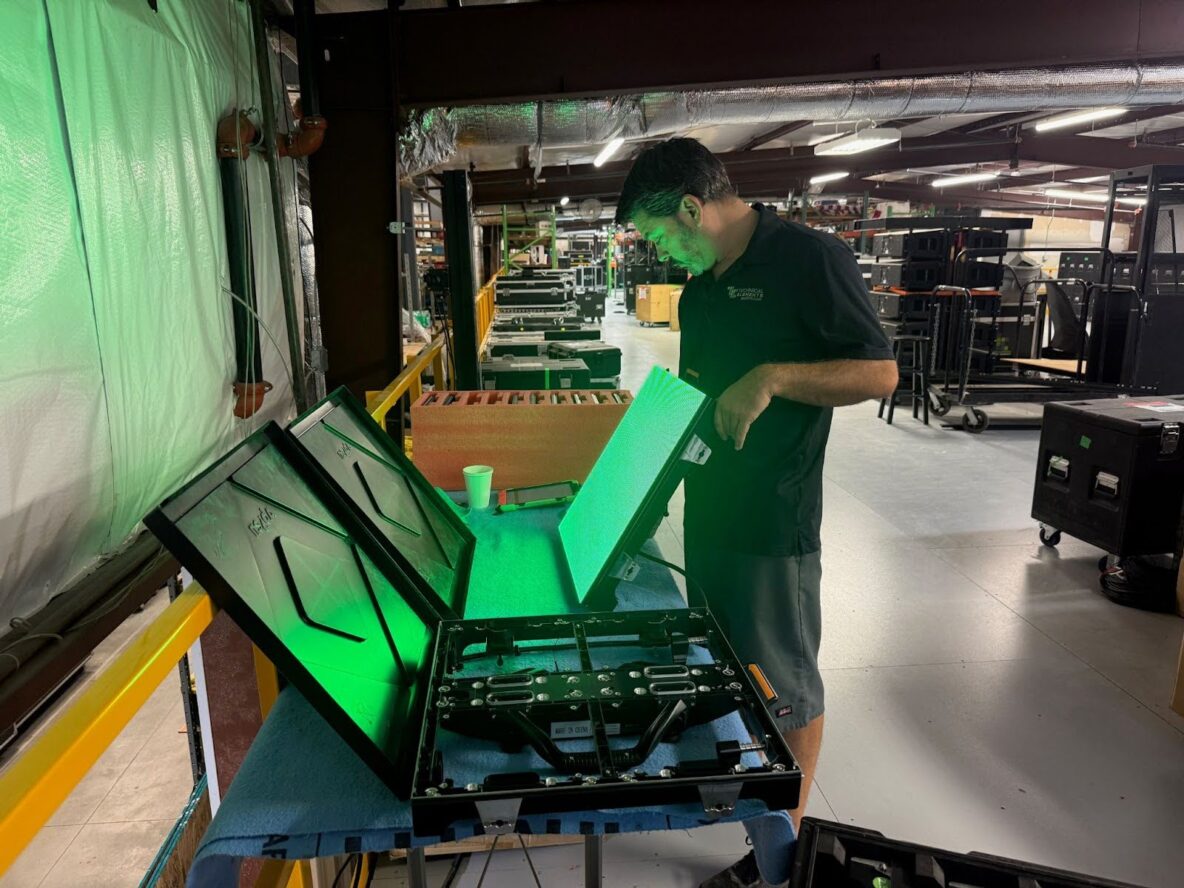
What happens to the equipment that fails or is returned damaged? We tapped the Technical Elements Repair Team to share their expert insights based on real-world scenarios to uncover the process and importance of the event equipment repair process.
What types of equipment do you repair most often after events?
The most common equipment repairs and maintenance needs are LED quadrants, audio gear, and lighting equipment. However, we have all the necessary tools and expertise to get them back in working order or to provide backup options if something is beyond repair.
What’s the most common issue you see with event gear, and how can clients help prevent it?
We would chalk up most repairs to general misuse. Things break when dropped, items get wet, and are sometimes returned covered in dust or dirt. Many of these issues can still be repaired, but they can also be prevented.
How quickly can you turn around repairs after an event?
The repair timeline depends on the equipment and the extent of the damage. Cabling repairs are quick, but moving lights often have to go back to the factory, which can take anywhere from 3 to 8 weeks.
What’s the most challenging or unusual repair you’ve ever worked on?
The most challenging repairs are intermittent issues and moving lights. Intermittent issues require the equipment to be plugged in for hours or even days before we can duplicate the issue. It can be challenging to recreate a show’s environment or identify where the failure occurred. Repairing moving lights is difficult and time-consuming. In most cases, we have to send them in to the factory for repairs.
One of the most unusual repairs was a power distribution board that would short, blowing the breaker and causing the unit to billow smoke. All passive testing with the unit powered off appeared to be fine.
What we discovered was a small solder bump that, over the years, had worn through a piece of shrink. This small solder point wasn’t touching anything to indicate a short, but when voltage was applied, the gap was small enough to arc to the chassis.
How do you test equipment to make sure it’s fully ready for the next event?
We have to think beyond its basic functionality and apply testing that matches the equipment’s intended use. For example, moving lights have a built-in testing feature, but we go beyond that to test their intended use, replicating how they would function in a live event setting.
What tools or techniques do you rely on most in your repair work?
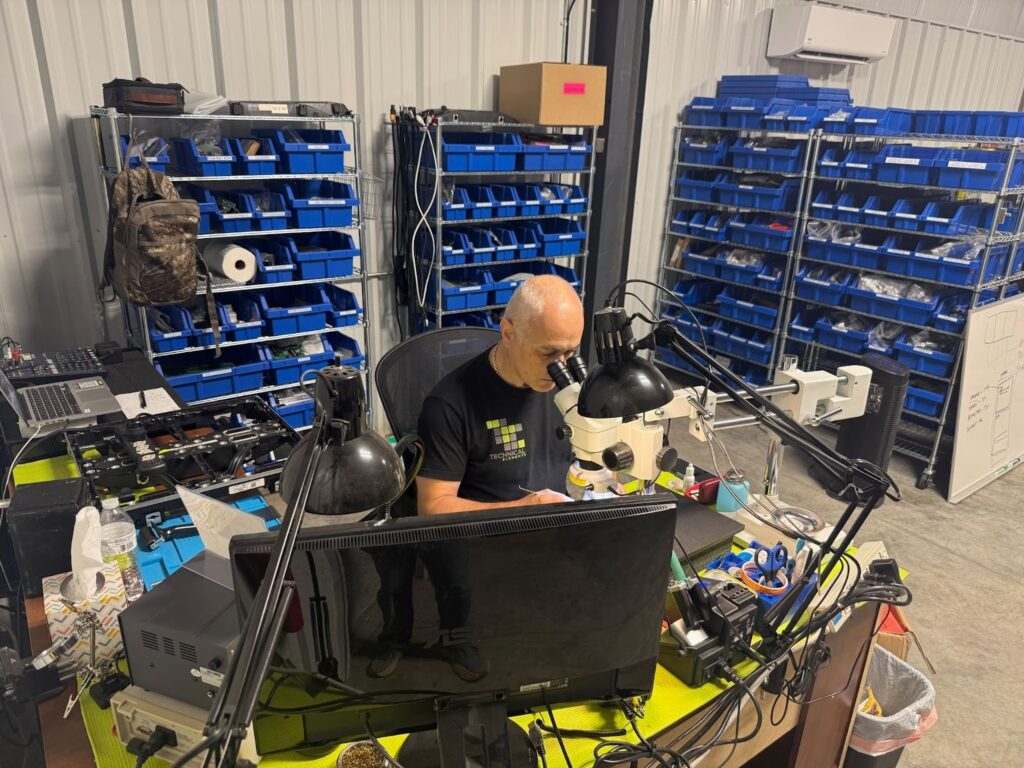
- For LED quadrant repairs, we rely on a microscope and precision soldering devices, such as an air or hot air gun.
- For lighting, we use a DMXcat that allows us to simulate a lighting console.
- Another vital tool is data; the reports we receive from the crews in the field help us recreate any issues and ensure we’re not sending out faulty equipment.
- A lot can be accomplished with basic hand tools that we’ve all acquired and are very protective of.
How does repairing and maintaining gear in-house help clients in the long run?
When we send out gear that is fully functional and operating as intended, clients and crews have peace of mind about the technology, allowing them to focus on the art.
What’s one piece of advice you’d give event planners to extend the life of their equipment?
Always keep up on regular maintenance. Equipment checks should be done whenever gear is returned, and not when you are preparing it to leave.
What does a typical day in the repair shop look like for your team?
Sorin, our LED Repair Technician, is very disciplined and always in at 8 am. He usually starts on the LED quadrants and also helps with other equipment repairs.
Jay is our hardware and fabrication guy who also oversees our LED inventory. He’ll do testing when things return and also “kits” the tiles to cases to make it easier for the shop guys to allocate and load for a show. Jay repairs stands, cases, oversees cable repairs, and occasionally repairs trucks. What Jay does day to day can vary greatly, but his superpower is catching as many small details as possible.
Joe manages the day-to-day operations of repair, which includes ordering parts and ensuring Sorin and Jay have what they need to avoid any delays. Joe also manages gear tracking and usage history (Asana) and jumps in to help with repairs when time allows.
What do you enjoy most about working on the repair side of event production?
We each find our own satisfaction. Sorin loves electronics and troubleshooting, and he has been doing so since he was a kid growing up in Romania. Jay loves fabrication and working with his hands. Joe enjoys managing operations and building a team to handle any challenges we may face.
“Ultimately, the job of the equipment repair team comes down to managing the tech so that artistry can truly shine through at every event.” If you’re planning an event, learn more about how we can help you create an unforgettable experience here.