
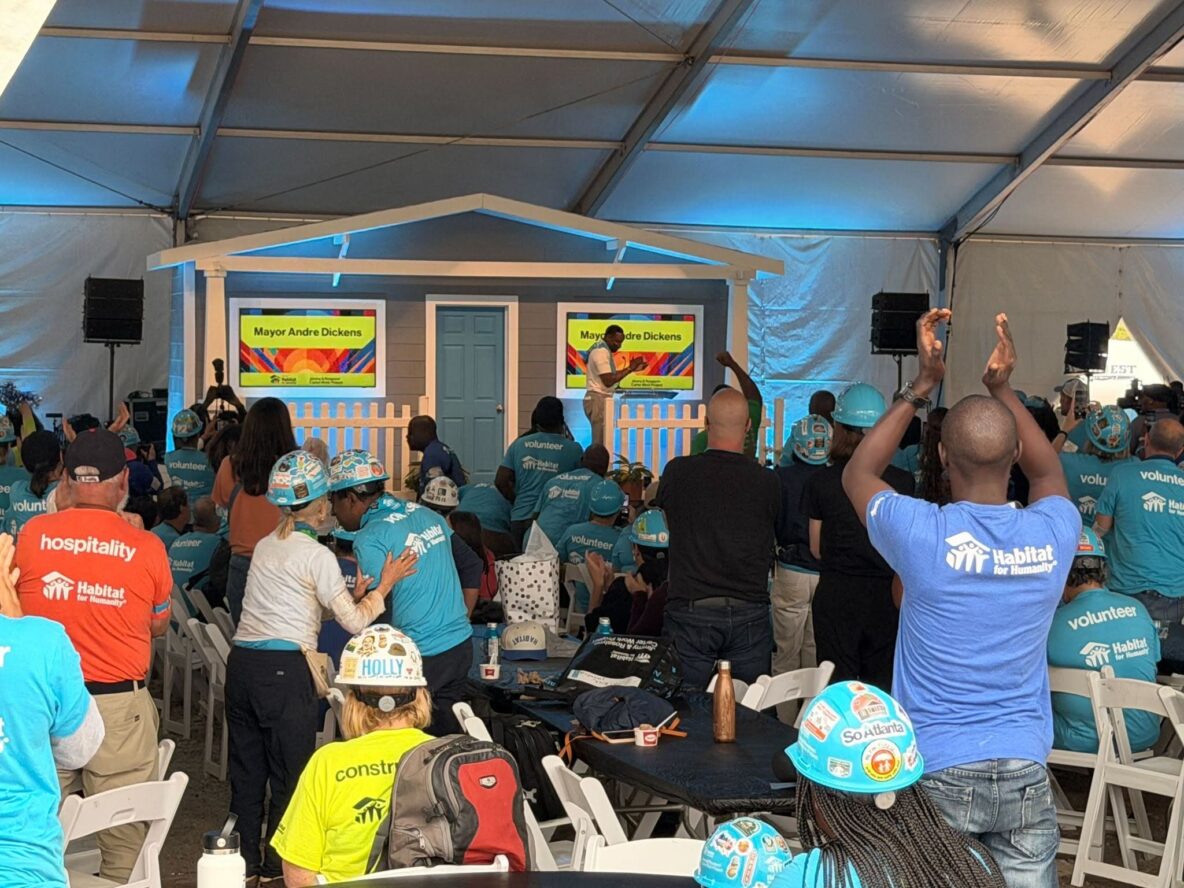
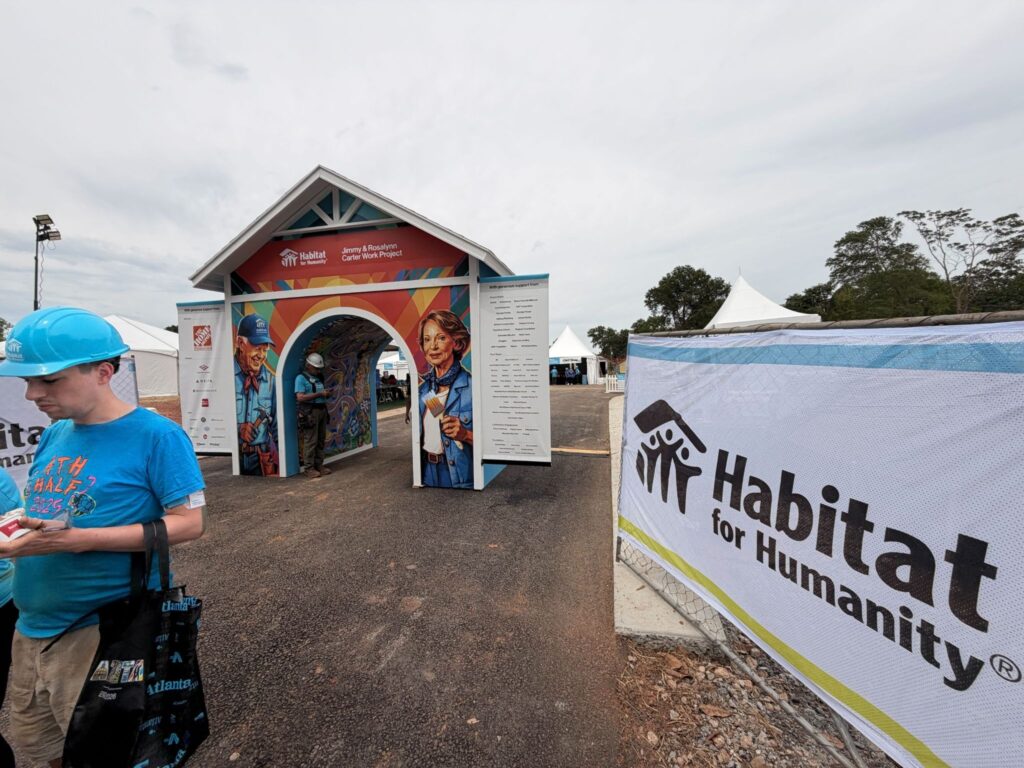
Technical Elements was on the ground in Sylvan Hills, a Southwest Atlanta neighborhood, for one of the most significant events in Habitat for Humanity’s history. The 40th Jimmy & Rosalynn Carter Work Project marked Habitat’s 50th anniversary and brought the program back to Atlanta for the first time since 1988.
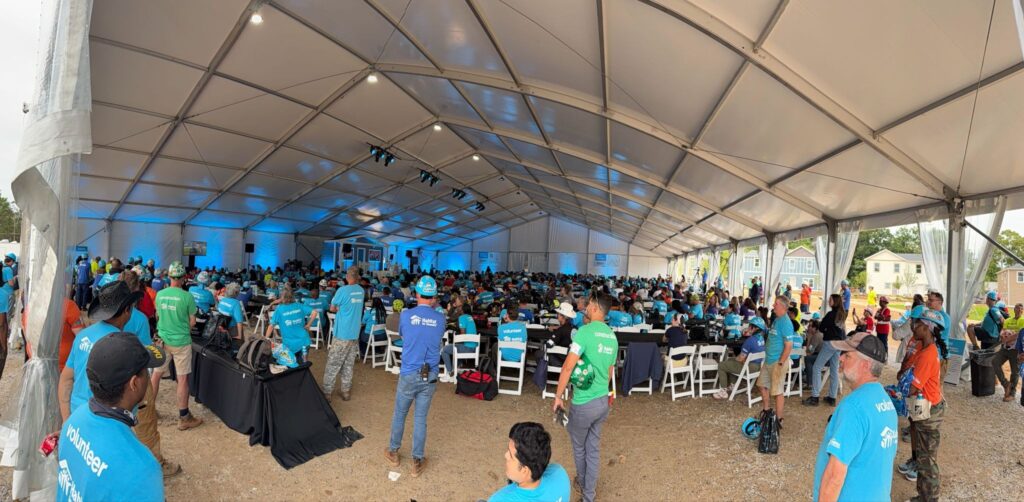
In five days, more than 1,000 volunteers, including corporate partners, sponsors, media representatives, and community leaders, came together to help build 24 affordable homes at Langston Park, Atlanta Habitat’s newest residential community.
This wasn’t just another volunteer build. It was a historic milestone for one of the world’s most recognizable humanitarian organizations, and it needed to be produced like one.
The Challenge: Building an Event Inside a Building Site
Most event productions start with a venue. This one started with a neighborhood under construction.
The Carter Work Project took place on an active build site where construction crews were framing homes at the same time volunteers were arriving, sponsors were being hosted, and media crews were rolling. Hard hats were required. Vehicle access was controlled. Construction schedules dictated the day.
On top of that, the activation stretched across multiple city blocks, not a single room, not a single tent. Every technical system had to be built from scratch: power, communications, audio, video, and staging. Nothing existed before the team arrived.
The challenge wasn’t just producing a great event. It was producing a great event while a neighborhood was simultaneously being built around it.
Our Approach: Connectivity, Distribution, Flexibility
Technical Elements approached the Carter Work Project the way our team approaches any complex, high-stakes production: with a clear event strategy, redundant systems, and the flexibility to adapt in real time.
Connectivity First
Across a site of this size, spanning blocks, involving multiple simultaneous activations, and operating across a full week, communication is everything. We deployed and managed approximately 75 radios to keep production teams, event organizers, security personnel, and volunteer leaders connected at all times. Daily distribution, charging cycles, inventory tracking, and coordination were all managed by our team behind the scenes. What attendees experienced as a seamless operation was powered by a carefully coordinated communications backbone running underneath it.
Distributed Experiences
Rather than concentrating all programming in a single location, we distributed audio throughout the neighborhood so that volunteers actively building homes could still hear announcements, music, and event content in real time. FM transmission systems carried sound across the site, keeping 1,000+ people engaged and informed, whether they were in a hospitality tent or framing a wall two blocks away.
Built-In Flexibility
Multi-day productions in dynamic environments don’t always go according to plan. Our production design included multiple presentation spaces, dedicated media support areas, and interview locations, along with redundant technical systems designed to accommodate changing conditions throughout the week. When the site shifted, our team shifted with it. This kind of adaptive event design is what separates a production partner from a vendor.
What We Delivered
Technical Elements provided comprehensive full-service event production support across the entire Langston Park site, including:
- Production Management: Site-wide coordination, multi-day technical management, and vendor and logistics support from start to finish.
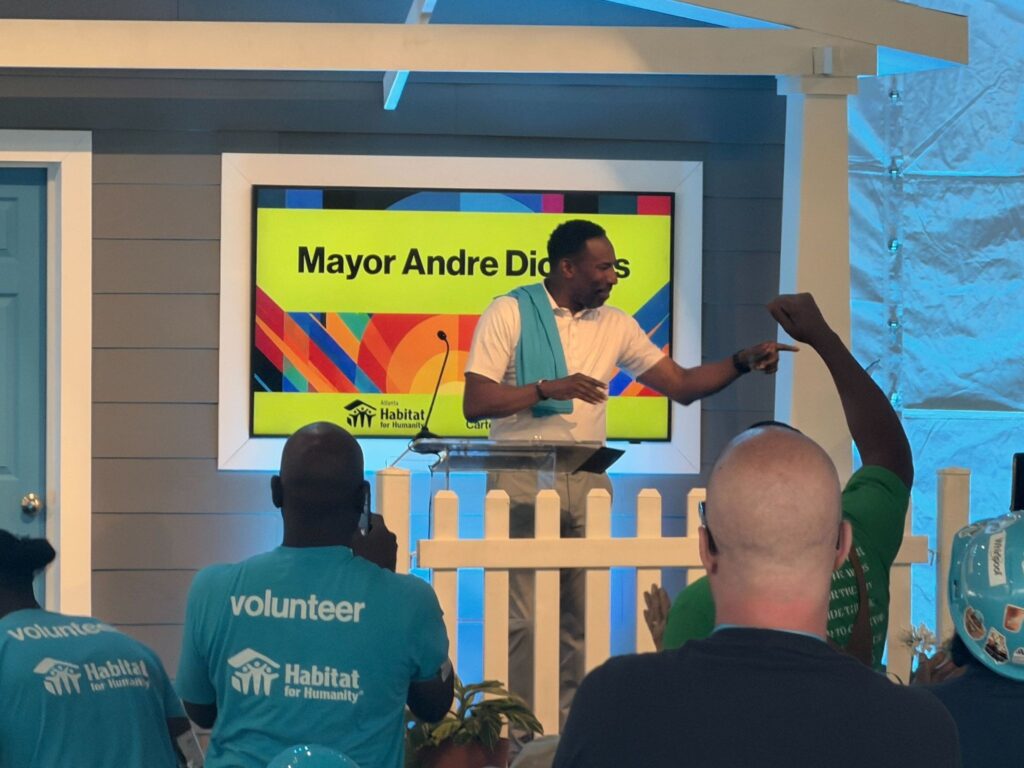
- Audio: Main stage audio systems, distributed neighborhood-wide audio, press feeds for media, wireless microphone systems, and dedicated podcast and interview audio setups.
- Video: Multi-camera 4K recording, broadcast camera operation, presentation playback systems, confidence monitors, and graphics support.
- Lighting: Stage lighting, tent lighting, decorative festoon lighting, architectural uplighting, and site work lighting across the full footprint.
- Scenic & Staging: Main presentation stage, secondary stage, camera platforms, scenic scrims, and drape elements. View examples of our stage work in our results gallery.
- Communications: Approximately 75 radios supporting staff, volunteers, security, production teams, and leadership across the site — distributed, tracked, charged, and managed daily throughout the week.
The Result
By the end of the week, 24 affordable homes were under construction at Langston Park, and one of Habitat for Humanity’s most important annual programs had been brought to life on the same site where it was being built.
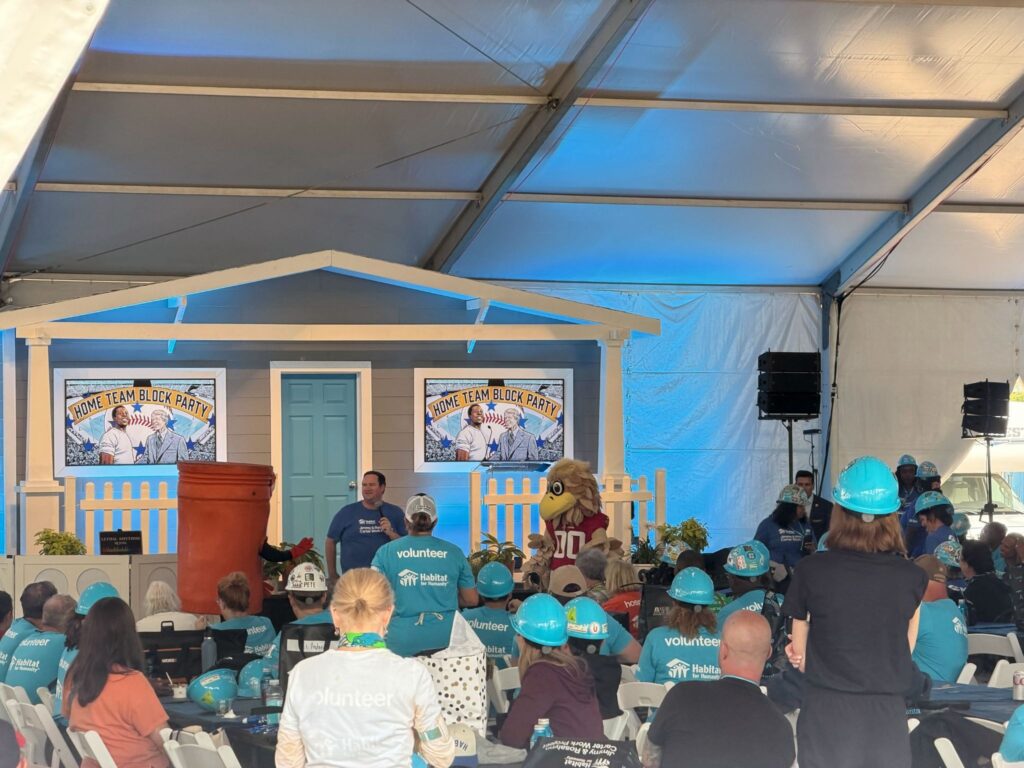
The most memorable moment wasn’t any single technical element. It was looking across the neighborhood and seeing an active housing development transformed into a fully functioning event campus: stages, media zones, hospitality areas, interview locations, distributed audio, and a professional production presence woven into every corner of the site.
The production team successfully supported multiple simultaneous environments across the entire week, adapting in real time to the demands of an active build site while maintaining a consistent, high-quality experience for the volunteers, sponsors, media, and future homeowners who made it all happen.
What This Means for Your Event
You don’t have to be producing the 40th anniversary of a world-famous humanitarian initiative for logistics like this to matter.
Any event that spans multiple spaces, involves real-time coordination across teams, or asks your attendees to move through a physical environment needs the same fundamentals: reliable communications, distributed audio and signage, flexible staging, and a production partner who has done this before.
Not sure what level of production support your event needs? Our team can walk you through the options, from rental inventory for smaller activations to full event production management for multi-day, multi-site programs. You can also read our take on choosing between in-house hotel AV and an independent production company; it’s one of the most common questions we get from corporate event managers.
Ready to talk about your next event? Get in touch with our team.