
Your gear list looks identical to every other production company’s quote. So why does one crew get rebooked for three years straight while another loses the contract after one show? The answer is almost never about the gear.
At Technical Elements, we’ve learned that the site team you put on the floor is the single biggest factor in whether a client signs again. This post breaks down how we build site teams strategically, what separates a crew that executes from one that retains, and the questions every corporate event manager should ask before signing a production contract.
TL;DR:
- A strategic site team is built around the right mix of client-facing judgment, technical depth, and on-site leadership, not just whoever happens to be available
- The crews that retain clients anticipate needs, communicate proactively, and solve problems before they reach the client
- A/V quality matters, but once gear hits a baseline of “good enough,” human experience drives repeat business
- When vetting a production company, ask who specifically will be on your floor and what events they’ve led
What a Site Team Actually Does
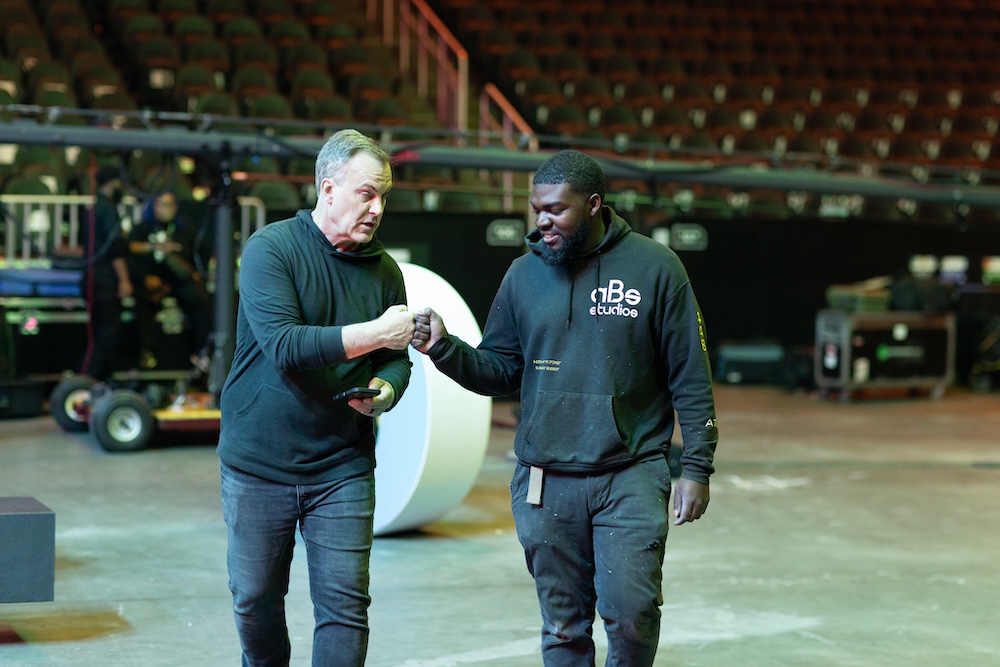
At Technical Elements, the site team is the department made up of every person who goes to the show site to execute the event. They are the face of the company once the load-in begins. They are also the people who decide, in real time, whether your event runs smoothly or unravels.
Building a strategic site team starts the moment a project goes active. We assign a staff member as the lead, then build out the team of contractors around that lead based on the specific demands of the show. Scale, complexity, venue quirks, and client communication style all shape who gets placed where.
This matters because the site team is not interchangeable labor. It is the most visible expression of your production partner’s culture, judgment, and reliability.
The Difference Between Executing a Show and Retaining a Client
Plenty of crews can execute a show. Far fewer can retain a client for three years and counting.
A crew that retains clients does four things consistently:
- Anticipates needs before the client voices them
- Communicates clearly throughout the day, not just when asked
- Solves problems early, while they are still small
- Makes the client’s life easier every single time
A real example: at the 2025 Sharing Hope in Jesus’ Name Conference for Samaritan’s Purse and the Billy Graham Rapid Response Team, our team faced a challenging venue, a tight load-in schedule, and a loading dock located far from the stage. Instead of pushing back, the team added more hands and crew members to absorb the friction. The client never had to think about logistics. That is the difference.
Strong execution is the price of admission. Anticipation, communication, and problem-solving are what get you invited back.
Client-Facing vs. Technical Roles: Why the Distinction Matters
One of the biggest mistakes event production companies make is staffing site teams based on who is available rather than matching the right person to the right role. A strategic site team requires two distinct skill profiles working in tandem.
For client-facing on-site roles, we look for emotional intelligence, adaptability, and the ability to solve problems while protecting the client relationship. These are the people who talk to your CEO, your CMO, and your speakers. They need to stay calm when the schedule shifts and confident when the client is anxious.
For purely technical roles, we prioritize technical skill, speed, accuracy, and execution under pressure. These are the people who make the lighting cue land, the audio stay locked in, and the LED wall come up clean.
Both matter. But putting a brilliant technician in a client-facing role, or a great communicator in a high-pressure technical seat, is how good shows get sideways.
Communication Is the Make-or-Break
Here is the moment that separates strong site teams from weak ones: something goes wrong on show day, because something always does, and the client finds out.
A strong site team gives a clear, calm update before the client has to ask. They confirm the issue, they share the plan, and they keep the client at ease because the client can see the plan in place.
A weak site team goes quiet. Or worse, gives conflicting answers. Or hides the problem until the client feels blindsided.
At the Inspire Foundation honoring Tricky Stewart at Buckhead Theatre, the venue’s house intercom system was not functional on arrival, despite being listed in the tech pack. Our PM, Bobby, immediately reached out to Technical Elements headquarters, and our support team delivered a Clearcom Freespeak intercom system to the load-in that same day. The client did not have to manage that problem. We owned it.
We train for the unexpected by over-preparing before show day. When something goes sideways, the team can stay calm, confirm the issue, and keep the client at ease because there is a plan in place. That calm is not a personality trait. It is a product of preparation.
How A/V Quality and Human Experience Actually Split
Here is the part that most corporate event managers do not hear from production companies upfront. Client retention is more about human experience than A/V quality.
The A/V has to be solid. Audio that holds up under outdoor rain at MOVE Conference, LED walls that anchor 360-degree seating at SkillsUSA, fiber interconnects between State Farm Arena and Georgia World Congress Center for 2819 Church’s Access event. That is the baseline. That is what gets you in the door.
But once your production partner clears that baseline, what clients remember is whether your crew was calm, proactive, and easy to work with. Trust and communication drive repeat business. Gear does not.
What to Ask Before You Sign
If you are vetting event production companies right now, most will lead with gear inventory and price. Very few will volunteer the most important information.
Ask these questions instead:
- Who specifically will be the lead on my event?
- What comparable events has that lead run in the last 12 months?
- What is your escalation structure when something goes wrong on-site?
- How much continuity will I have between this event and the next one?
- What does your post-show debrief process look like, and how does it shape the team you bring back?
For context on that last question: at Technical Elements, every debrief covers what worked, what broke, what the client noticed, and what we need to change before the next call time. That feedback directly shapes how we build the team for your next event.
The Takeaway
A strategic site team is the difference between a one-time vendor and a three-year partner. The gear quote tells you what a production company owns. The site team tells you what they will actually deliver on the floor.
If you are planning a corporate event and want a site team built around your specific goals, venue, and audience, reach out to Technical Elements. We will tell you exactly who will be on your floor and why.